
Home standby, air-cooled
Air‑cooled Generac generators: the right unit for most homes, and how to know.
Most of the standby generators County Line Electric installs are air-cooled Generac units: compact, quieter than people expect, running on the gas line or a propane tank, carrying a whole house or the circuits that matter. This page explains what they are, what they can and cannot carry, and how the choice is actually made.
What it is
An engine, a fan, an alternator and a transfer switch.
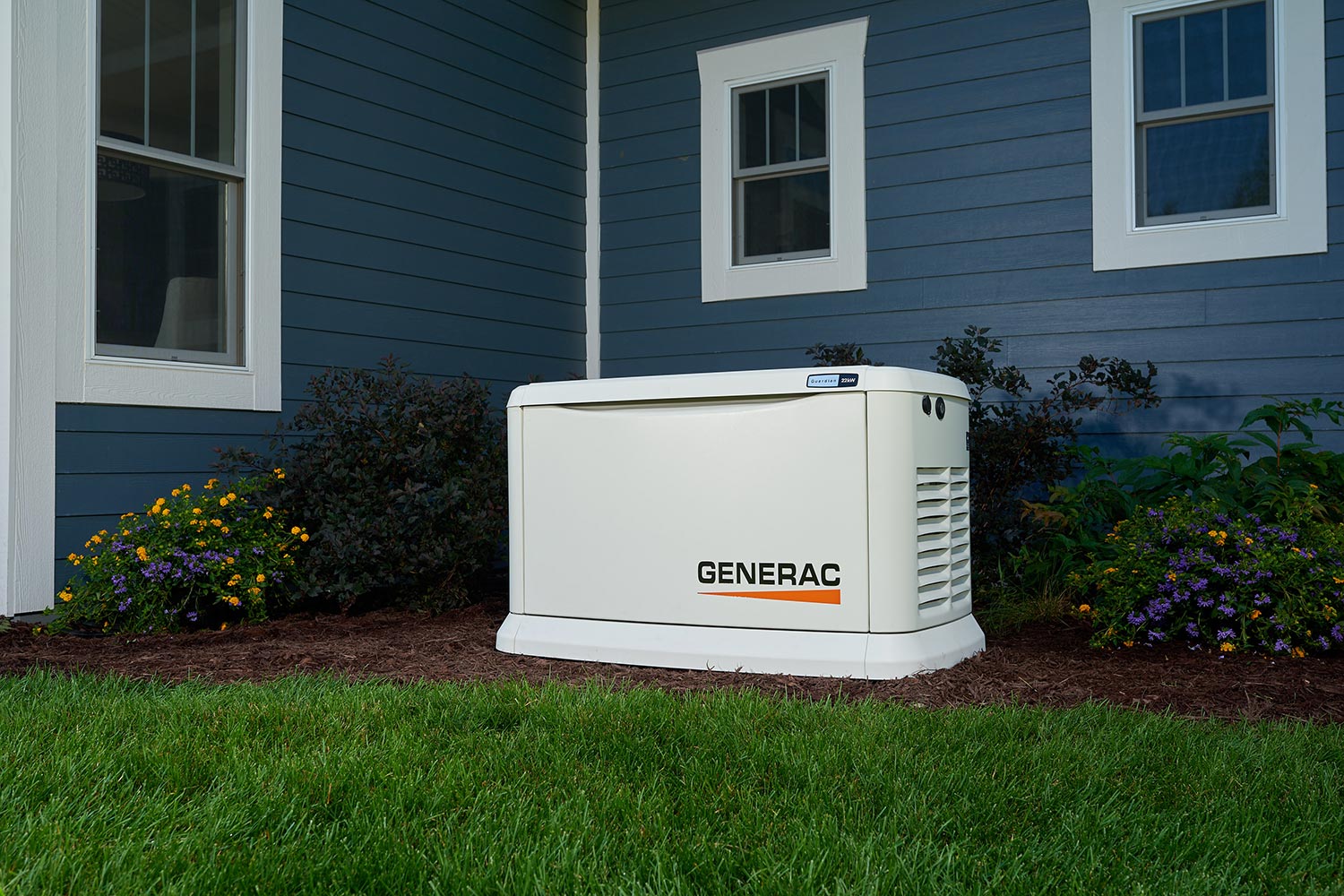
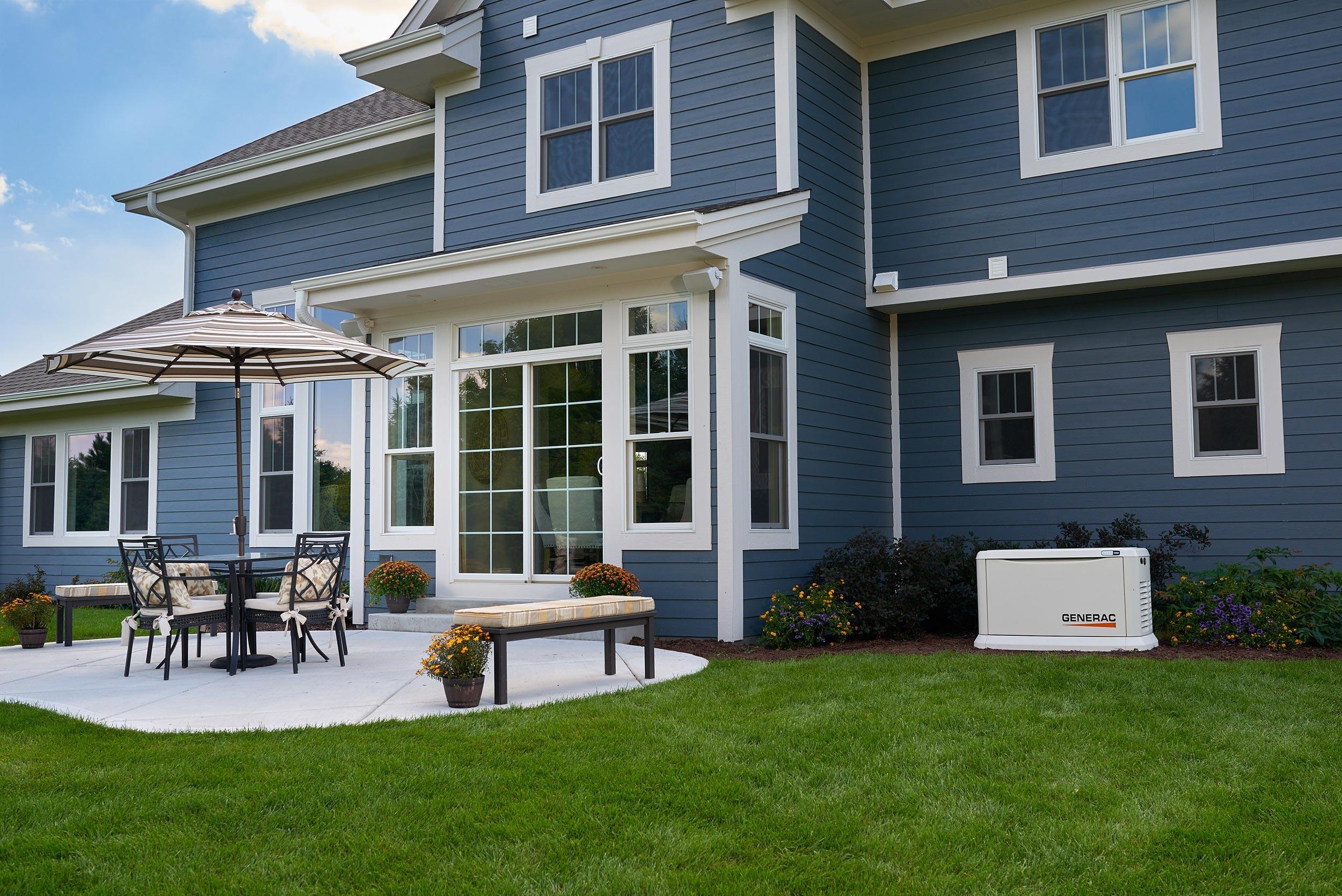
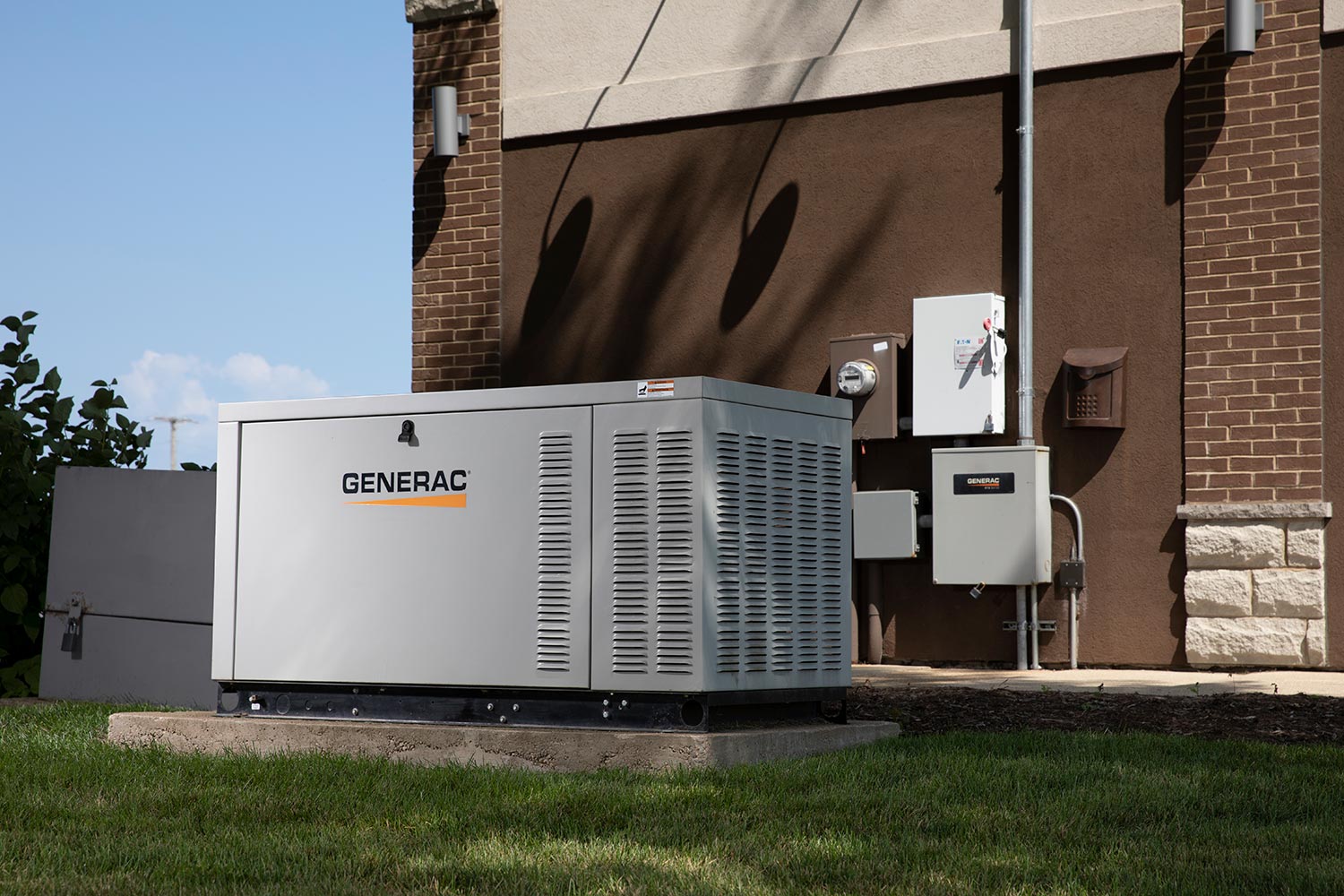
An air-cooled Generac is a single or twin-cylinder engine cooled by a fan pushing air across the cylinders, driving an alternator inside a weatherproof enclosure on a pad beside the house. It connects to the natural gas line or a propane tank, and to the electrical panel through an automatic transfer switch. When utility power drops, the switch disconnects the house from the grid, the engine starts, and within seconds the house is running on the generator. When utility power returns and holds, the switch hands back and the engine cools down and stops. Once a week it starts itself for a few minutes so it is ready.
Generac's home standby line runs from about 10 kW to 26 kW in this family. The smaller units back up a chosen set of circuits through a dedicated panel; the larger ones carry a typical whole house, including central air conditioning, with a transfer switch that can manage the biggest loads so they do not all start at once. County Line installs the whole range and sizes each one from a load calculation at the site.
What it carries
A typical Conejo Valley house, in one unit.
The whole panel
On a house with gas heat, gas water heating and one or two air conditioning systems, a 22 to 26 kW unit usually carries everything through a 200 amp transfer switch with load management on the big motors.
Or the circuits that matter
Refrigerators and freezers, the well or booster pump, the gate, the garage doors, the network, lighting, the medical equipment, one air conditioner. A smaller unit on a managed set of circuits costs less and runs less fuel.
What pushes you past it
Several air conditioning systems, a pool, an electrified kitchen, a guest house, more than one pump. At that point the honest answer is a liquid-cooled unit, and County Line will say so.
Sizing
The load calculation, not the square footage.
Every generator company quotes a size, and the number that matters is how it was reached. County Line counts the circuits that have to run at the same moment, reads the nameplates on the air conditioning compressors and pumps, adds the starting surge of the largest motor, and compares that figure with the unit's rating on the fuel you will use. Natural gas gives slightly less output than propane, and the spec sheet lists both. A unit sized to the edge will run, but it will run hot, loud and short of margin on the one afternoon it is needed.
Two things change the answer more than people expect. Air conditioning: a central system is the single largest load in most houses here, and a second one often tips the house from one unit size to the next. And the well: a pump draws several times its running current for a moment at start, so a house on a well is sized around that moment, not around the lights.
The installation
Six steps, one licensed contractor.
- 01
Site visit and load calculation
Panel, meter, yard, what has to keep running. The written estimate follows.
- 02
Placement
Generac's clearances from windows, doors and vents, the local setback, the HOA if there is one, the Coastal Zone in Malibu. Away from bedrooms and the neighbor's patio.
- 03
Permit
County Line pulls the electrical permit and coordinates the gas work with a licensed plumber or your propane supplier.
- 04
Pad and set
The pad, the unit, the automatic transfer switch at the panel, the conduit between them.
- 05
Connection and startup
Gas and electrical connections, startup, a simulated outage with you watching, and the inspection.
- 06
Service, twice a year
Oil, filters, battery, a load test and the transfer switch, both visits, $600 for the year. Units other contractors installed are welcome.
Fuel and sound
Gas or propane, and what the neighbors hear.
On natural gas the unit draws from the same line as the furnace, and the line and meter have to carry both at once; County Line confirms the meter capacity before the estimate is written. On propane the tank is sized from Generac's published consumption figures for the unit and the days a shutoff can run, not from the size of tank that happens to be on the property. Topanga, the Malibu canyons and much of Montecito are propane country, and the supplier's ability to reach the tank in fire season is part of the plan.
Air-cooled units are quieter than their reputation. Generac's current enclosures bring the weekly exercise cycle down to the level of a conversation at the property line, and placement does the rest. Under full load they are louder, and County Line says so rather than promising silence. The weekly exercise is scheduled for an hour nobody minds, and Generac's Mobile Link app lets you and the office confirm it ran.
County Line Electric at a glance
- 20+ yrsIn businessJeff Tucker has run County Line Electric in the Conejo Valley for over 20 years.
- #949580California contractor licenseLicensed, bonded and insured. Check it on the CSLB site any time.
- GeneracStandby generator estimatesA written estimate after a site visit and a load calculation.
- A+BBB Accredited since 2017Rated A+ by the Better Business Bureau. See the profile.
- 5.0HomeAdvisor ratingFive stars from every reviewed job. Read the reviews.
Air-cooled questions
Is an air-cooled generator enough for a whole house?
For most houses in the Conejo Valley, yes. A 22 to 26 kW air-cooled Generac carries a typical house with gas appliances and one or two air conditioning systems, with load management on the compressors. Houses with several air conditioning systems, pools, pumps and electrified kitchens move to a liquid-cooled unit, and County Line will tell you which from the load calculation.
How long can an air-cooled Generac run?
As long as the fuel holds and the oil is maintained. On natural gas that is effectively the length of the outage; on propane it is the tank. Generac recommends checking oil during extended runs, and County Line explains the routine at startup. A multi-day shutoff is within what these units are built for at a sensible load.
What does an air-cooled Generac installation cost?
It depends on the unit, the fuel, the distance from the panel to the pad and the gas work, so County Line gives a written estimate after the site visit rather than a price on a page. The written estimate lists the unit, the switch and the scope. The service plan is $600 a year for both visits.
Can County Line service a generator somebody else installed?
Yes. The twice-yearly service, repairs and transfer switch work on Generac units installed by other contractors, across Ventura, Los Angeles and Santa Barbara counties.
Does the unit need to be the California model?
Yes. Generac sells California emissions-compliant versions of its home standby units, and that is the version that can be permitted and sold here. County Line orders the California unit.
Generators
Official references
Where the facts on this page come from.
County Line links to the authorities rather than restating them. Rules change; these pages are current.
- Generac home standby generators: the current air-cooled lineup
- Generac: backup generator installation: the manufacturer's account of an installation
- Generac Protector series specification sheet (PDF): where the liquid-cooled line begins
Next step
Which unit does your house need? Ask.
The unit your house needs comes from a load calculation. Send your name, phone and city, and County Line follows with a site visit and a written estimate, with the reasoning on it.
Or call (805) 499-0823. Monday to Friday, 9 to 5.