
Heat waves and grid strain
Heat waves push the grid past its limit. Your air conditioning keeps running.
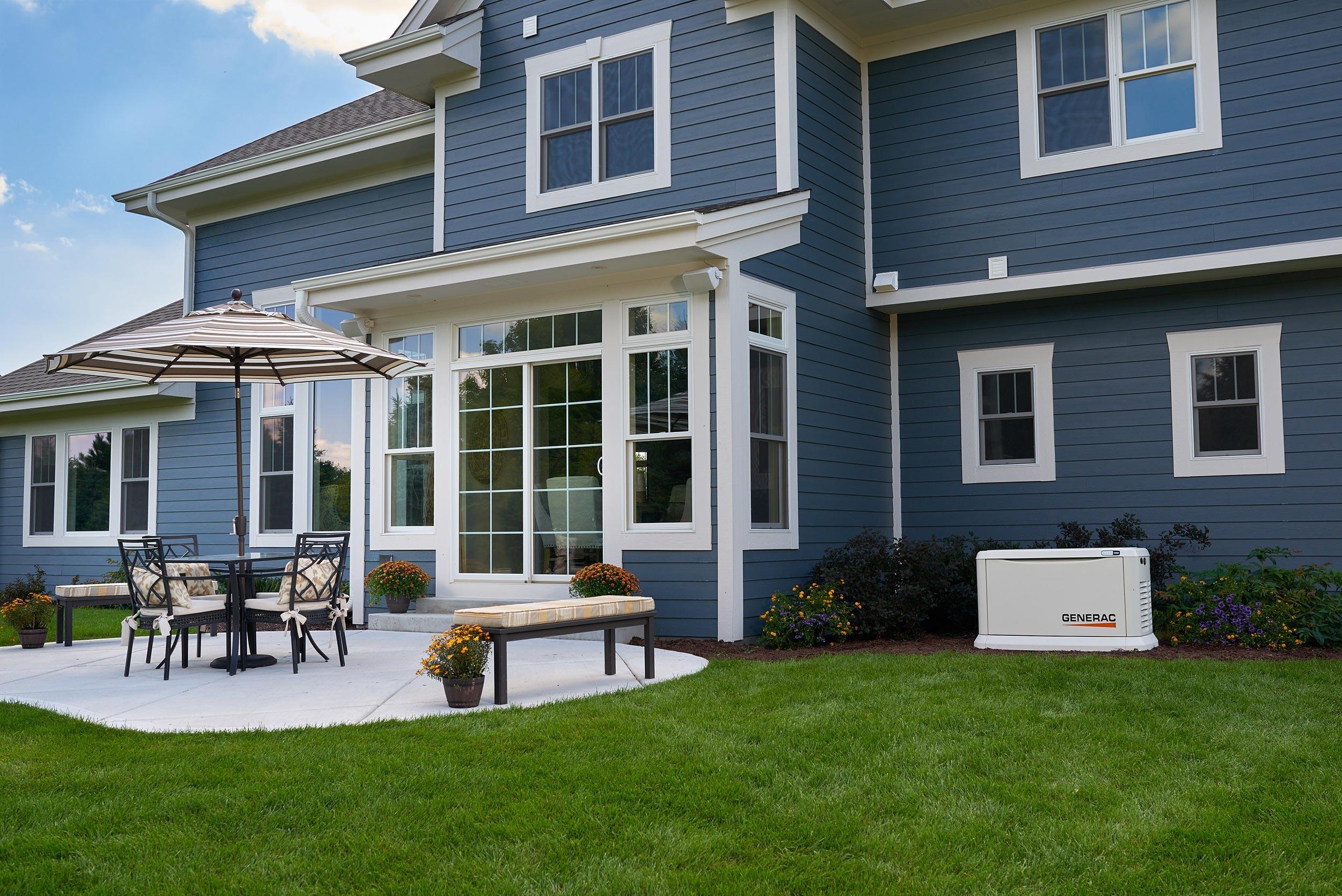
When every house in the valley runs its air conditioning at once, neighborhood transformers overheat and the state grid runs short of power, on exactly the days nobody can do without cooling. County Line Electric sizes Generac standby generators to carry the air conditioning, not just the lights, so a heat wave outage is something you hear about instead of sitting through it.
Why heat turns the power off
Two ways a heat wave turns off the power.
The first is close to home. The transformer on the pole or the pad down the street is sized for a neighborhood's normal load. In a heat wave every air conditioner on it runs for hours, the equipment heats up, and when the nights stay warm it never cools down. Edison's own outage pages name it: heavy use of air conditioning can overload power lines and transformers. In the September 2022 heat wave Edison reported that transformers had no chance to cool down because nighttime temperatures stayed so high.
The second is statewide. When demand across California outruns the power available, the state grid operator, the California Independent System Operator, issues a Flex Alert asking everyone to cut use in the late afternoon and evening. If that is not enough, it can order the utilities to rotate outages through neighborhoods to protect the grid. It did exactly that in the August 2020 heat wave: on August 14, about 491,600 customers of the state-regulated utilities lost power in rotating outages, 132,000 of them Edison's. On September 6, 2022, demand hit the all-time record of 52,061 megawatts and the grid operator declared its highest emergency level; rotating outages were avoided that day.
What a heat wave outage turns off
The outage comes on the day you need the house most.
The air conditioning
Every system in the house stops, and on a 100 degree afternoon the house follows the weather within hours.
The people most at risk
The CDC names people 65 and older, infants and young children, and people with chronic medical conditions among those most at risk in extreme heat. A cool house is the protection.
The refrigerator and freezer
Food is safe in a closed refrigerator for about four hours. Insulin and other medications that must stay cold are on the same clock.
Work and school at home
The computers, the monitors and the network go down with the house, in the middle of the working day.
Sizing for air conditioning
Air conditioning is the load that decides the generator.
A central air conditioner is the largest load in most houses here, and its compressor draws several times its running current for a moment when it starts. That starting surge, not the running load, is what a generator has to be sized for. A second or third system can tip a house from one generator size to the next.
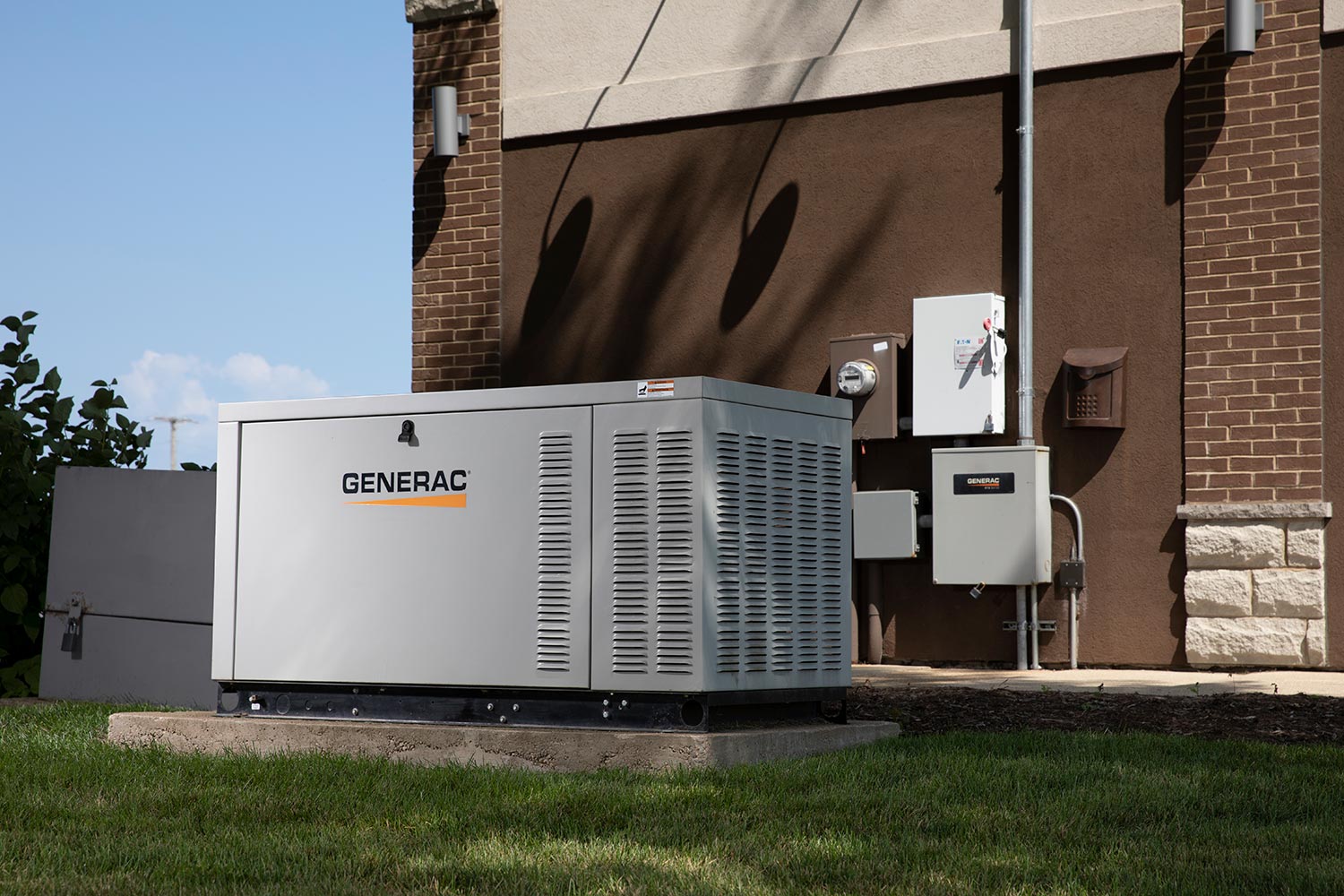
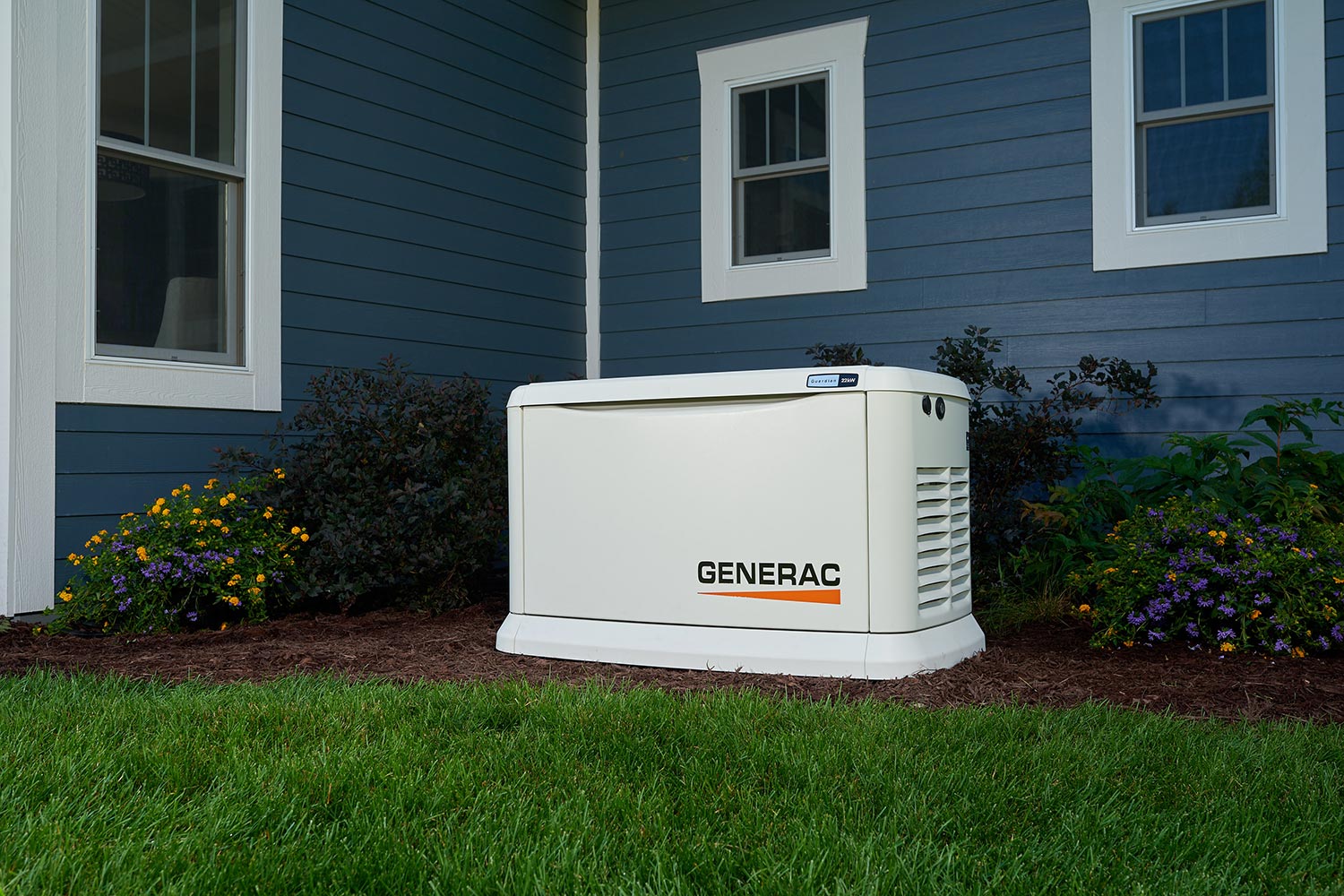
County Line reads the compressor nameplates at the site visit and sizes the generator around them, with load management on the transfer switch so the big motors take turns starting instead of all at once. Most houses with one or two systems land on a 22 to 26 kW air-cooled Generac. Estates with three or four systems, a pool and an electrified kitchen move to a liquid-cooled unit, built to run at high load for days.
Heat and wind
The hot weeks and the shutoff weeks overlap.
Santa Ana wind season starts in the fall, while some of the year's hottest days are still ahead. When the wind brings a Public Safety Power Shutoff, it can land on a hot day, and the house loses its air conditioning to the wind rather than to the heat. A generator sized for the air conditioning covers both.
Before summer
Get the generator ready for the heat.
- Book the spring service: oil, filters, battery and a load test. County Line's plan is $600 a year for both visits.
- Run the air conditioning on the generator during the test, with every system on, so the first real test is not a heat wave.
- Check the load management: the order the compressors start in, and that nothing trips when they all run.
- Confirm the weekly exercise in the Mobile Link app.
- Sign up for Flex Alerts, so you know when the state grid is tight.
County Line Electric at a glance
- 20+ yrsIn businessJeff Tucker has run County Line Electric in the Conejo Valley for over 20 years.
- #949580California contractor licenseLicensed, bonded and insured. Check it on the CSLB site any time.
- GeneracStandby generator estimatesA written estimate after a site visit and a load calculation.
- A+BBB Accredited since 2017Rated A+ by the Better Business Bureau. See the profile.
- 5.0HomeAdvisor ratingFive stars from every reviewed job. Read the reviews.
Heat and generator questions
Can a standby generator run central air conditioning?
Yes, when it is sized for it. The generator has to handle the compressor's starting surge as well as its running load, and the transfer switch manages the large motors so they do not all start at once. County Line sizes from the nameplates on your equipment.
What size generator runs two air conditioners?
For most houses with gas heat and gas water heating, two central systems fit on a 22 to 26 kW air-cooled Generac with load management. Pools, wells, electrified kitchens and guest houses change the answer, which is why County Line sizes from a load calculation rather than square footage.
What is a Flex Alert?
A call from the California Independent System Operator, which runs the state grid, asking everyone to cut electricity use voluntarily, usually in the late afternoon and evening, when demand is close to the supply available. It is the signal that the grid is tight.
Do rotating outages still happen in California?
They are the grid operator's last resort, used when conserving is not enough. California last ordered them in the August 2020 heat wave. Local outages from overloaded equipment happen on hot days without any statewide order.
Will a battery keep my air conditioning on?
For a while. Depending on its size and the system, a battery runs air conditioning for hours. A generator runs it for days on natural gas or propane. Designed together with solar, they make a residential microgrid.
Standby power
Keep reading.
Official references
Where the facts on this page come from.
County Line links to the authorities rather than restating them. Rules change; these pages are current.
- Flex Alert, California Independent System Operator: what a Flex Alert is and how to sign up
- Root cause analysis of the August 2020 rotating outages (PDF): the state grid operator, utilities commission and energy commission
- Centers for Disease Control and Prevention: heat and health: who is most at risk in extreme heat
- FoodSafety.gov: food safety during a power outage: how long food stays safe
- Edison: repair outages: heavy air conditioning use overloads lines and transformers
- Generac: the equipment County Line installs
- CSLB license check: license #949580
Next step
Size it for the air conditioning.
Name, phone, city and how many air conditioning systems the house has. County Line visits, reads the nameplates and writes the estimate.
Or call (805) 499-0823. Monday to Friday, 9 to 5.