
Residential Microgrid
The car is the biggest battery on the property.
A long-range electric vehicle holds several times the energy of a wall-mounted home battery. Bidirectional charging lets it feed the house. Making that safe and automatic is electrical work.
Vehicle to home
What it takes to let the car power the house.
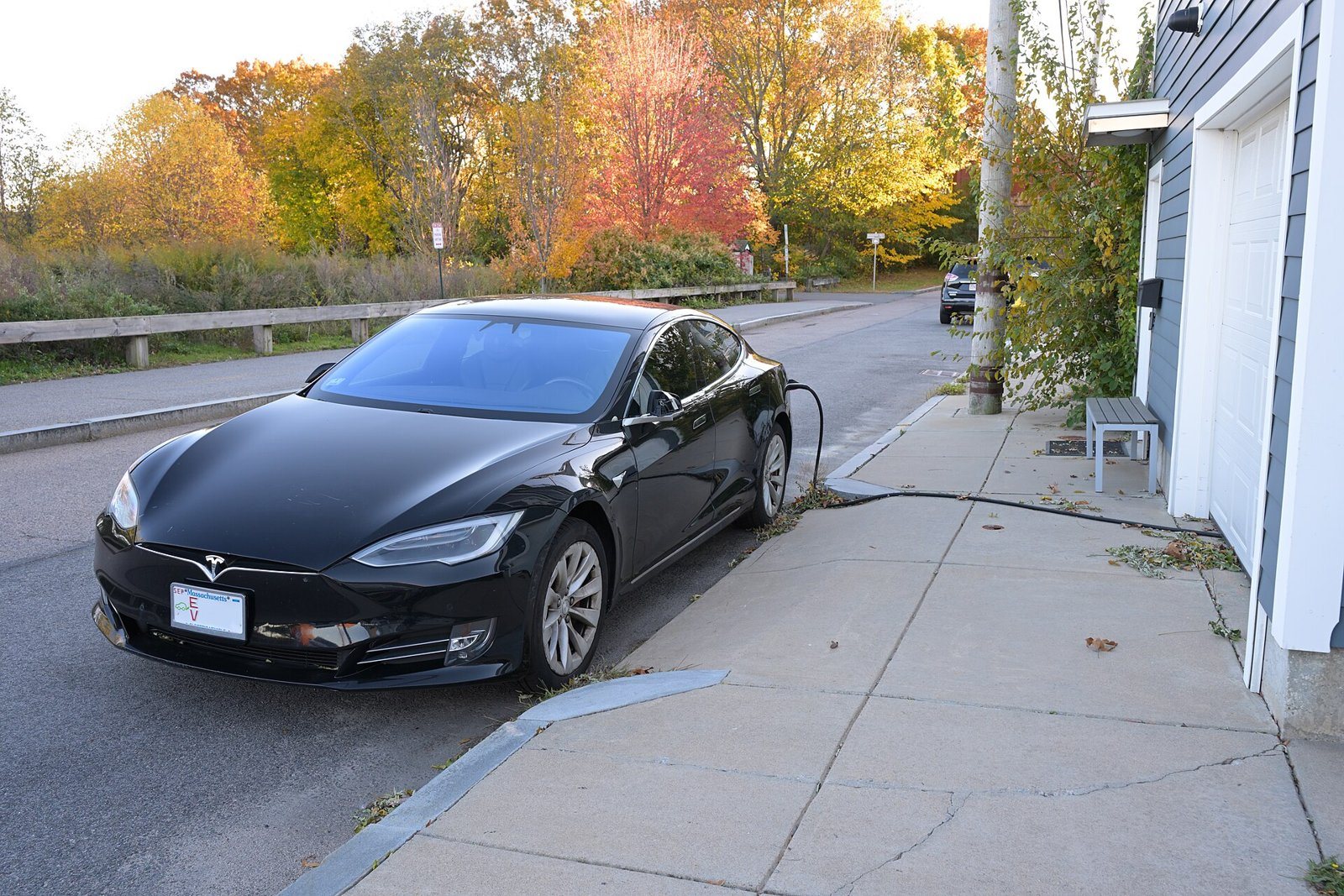
A wall-mounted home battery stores roughly the energy a house uses in a quiet evening. A long-range electric vehicle parked in the garage stores several times that. Bidirectional charging, sometimes called vehicle-to-home, is the equipment and the electrical design that lets the car push that energy back into the house during an outage. Tesla calls its version Powershare: a compatible vehicle, the Tesla Wall Connector, and a home gateway that islands the house from the grid and lets the vehicle carry the loads. Other manufacturers have their own versions and their own hardware, and the electrical questions are the same for all of them.
The first electrical fact is that the car becomes a source, and the house has to be wired to accept one. That means a gateway or transfer device at the service that can open the connection to the utility the moment the grid drops, so the car is never feeding the neighborhood or a lineman working on a de-energized line. It means the loads the car will carry are on a panel that gateway controls. And it means the circuit to the Wall Connector is sized and protected for power flowing both ways, on a breaker and a conductor that the load calculation accounted for in both directions. County Line Electric is a Tesla Certified Installer for the Wall Connector and the Powershare home equipment, and does that design as part of the residential microgrid rather than as an add-on.
The second fact is that the car is not always home. A residential microgrid that relies on the vehicle as its only battery is a microgrid that fails every time the family drives to dinner. In the design, bidirectional charging is one source among several: it extends the overnight hours, it carries the house silently while the generator rests, and it lets a family who left the generator decision for a later year have real backup today. It does not replace the generator on a property with a well pump and a three-day shutoff, and it does not replace the stationary battery's job of covering the first second before anything else starts.
The third fact is capacity. A Level 2 charger at 48 amps is one of the largest circuits in a house, and a bidirectional installation adds the gateway and often a dedicated subpanel. On an older service, especially a 100 or 150 amp service on a house that has grown, the honest answer can be a service upgrade before the charger, and the load calculation says so before anyone buys hardware. On new construction, County Line wires the garage for bidirectional charging at rough-in whether or not the owner has chosen the car yet, because the conduit costs almost nothing while the walls are open.
Permits and the utility treat a car that can export power the way they treat a battery: an electrical permit and inspection with the city or county, and an interconnection application with Southern California Edison or LADWP where the equipment can push power to the grid rather than only to the house. County Line files both. The equipment itself, which vehicles qualify and how much they can deliver, changes by model year and is stated on the manufacturers' own pages linked below; the electrical design around it does not change much at all.
Back to the overview: Residential Microgrid.
Questions
Does County Line Electric install Tesla Powershare?
Yes. County Line Electric is a Tesla Certified Installer and installs the Tesla Wall Connector and the Powershare home equipment that lets a compatible Tesla power the house during an outage, as part of a residential microgrid or on its own, in Ventura, Los Angeles and Santa Barbara counties.
Can the car replace a standby generator?
For a short outage in a house with modest loads, a bidirectional EV can carry the house. For a multi-day shutoff on a property with pumps, gates and air conditioning, or on any day the car is not home, it cannot, which is why County Line designs it as one source alongside a generator and a stationary battery rather than instead of them.
Official references
Where the facts on this page come from.
County Line links to the authorities rather than restating them. Rules change; these pages are current.
- Tesla Powershare: which vehicles and equipment qualify, in Tesla's own words
- Tesla home charging installation: the Certified Installer program County Line is part of
- SCE Public Safety Power Shutoffs: the outages this is designed for
The series
One question at a time.
One question at a time: each page in the residential microgrid series answers a single part of the design.
- Designed for the shutoffsThe outage is the design brief
- Generator and battery togetherWho carries what, and when
- Smart panels and load managementDeciding what stays on
- Solar inside the microgridWhy panels alone go dark
- The all-electric houseTitle 24 and the service size
- Canyon and coast homesPropane, wells, gates, days
- Permits and the utilityInterconnection and inspection
- Keeping it readyA system that is never tested fails
- When it is too muchThe honest page
Next step
Tell us what has to stay on.
Tell us what has to stay on when the grid is off: the well, the gate, the kitchen, the chargers, with your name, phone and city. Jeff walks the panel and the yard, then the design conversation starts.
Or call (805) 499-0823. Monday to Friday, 9 to 5.