
Residential Microgrid
Propane, wells, gates and days: the canyon and coast design.
The properties that need a residential microgrid most are the ones where the usual assumptions fail: no gas main, no city water, a long driveway with a gate, and a shutoff measured in days.
Where the design changes
A hillside estate is a small utility with one customer.
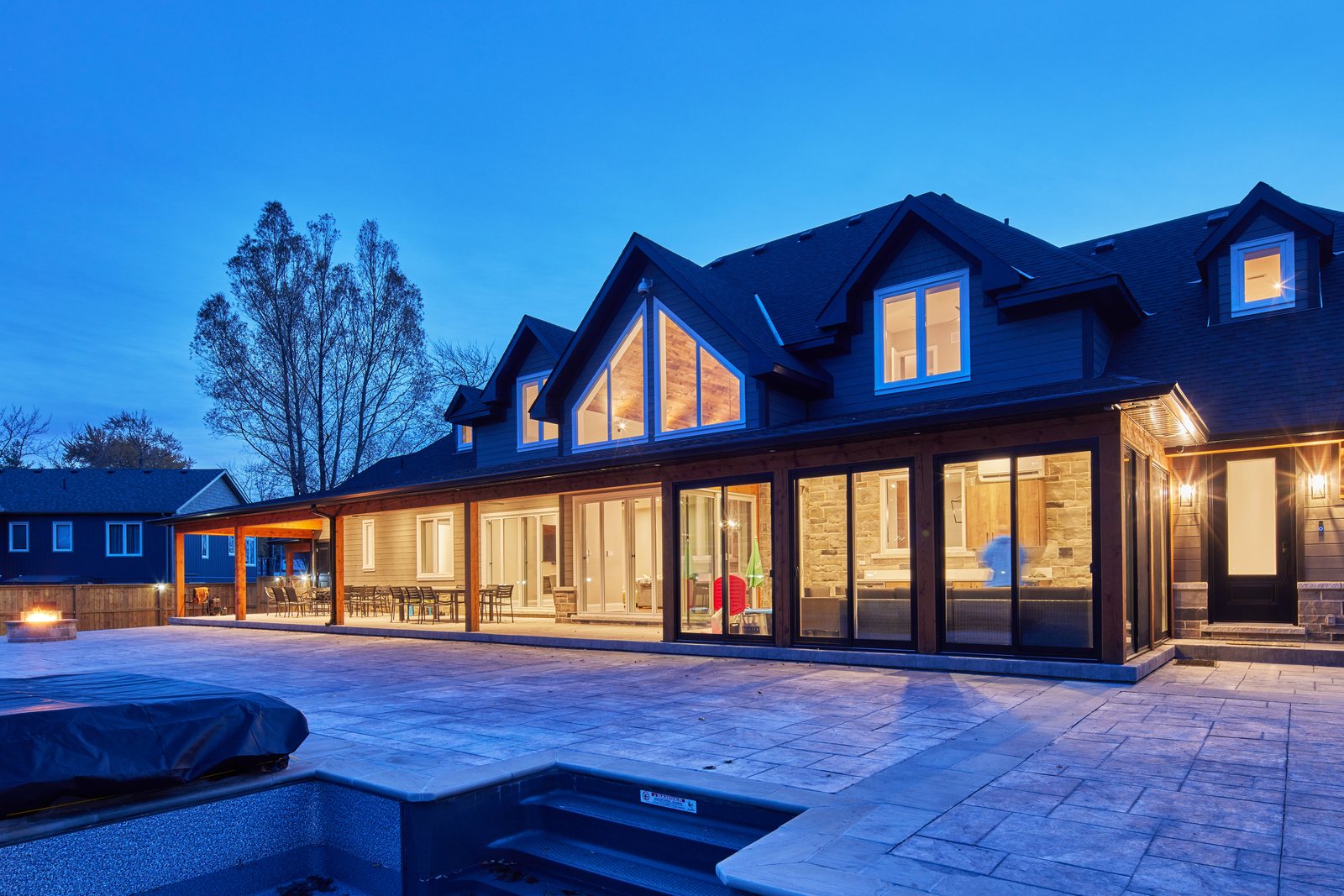
In the Conejo Valley a residential microgrid is built on a natural gas main, city water and a generator that starts when Edison shuts the circuit off. In Malibu above the highway, in Topanga, in the canyons of the Santa Monica Mountains and in the foothills above Montecito, none of those assumptions hold. There is often no gas main, so the generator runs on propane from a tank on the property. There is often no city water, so a well or a booster pump is the first critical load and the reason the design cannot fail. The driveway has a gate, the gate is electric, and the shutoff may come the day the family needs to leave. And the shutoffs are longer, because the lines that serve these properties are exactly the ones the utility patrols last.
Propane changes the generator design in two ways. The tank has to be sized for the days the design assumes, with the generator's consumption at expected load, and the supplier has to know the property has a standby generator so it is filled before fire season rather than after. And because propane is finite in a way a gas main is not, the battery and the solar matter more: every hour the generator rests on the battery, and every morning the roof refills it, is propane left in the tank for the fifth day. County Line sizes the tank, the generator, the battery and the solar as one fuel budget.
Water is the load that sets the generator size. A deep-well pump has a starting current several times its running current, and a backup source that cannot start it leaves the property without water during the one week water matters most. The pump is the first circuit on the critical list and the first number in the load calculation, and the transfer scheme is arranged so the pump always has a source: generator by day, battery with enough instantaneous capacity at night, with the smart panel shedding everything else before it ever sheds the pump.
The site adds its own rules. In the City of Malibu the Coastal Zone can require review of where a generator pad and a propane tank sit, and the fire department has its own clearance requirements for the tank. Unincorporated Los Angeles County and Ventura County have their own building departments and inspectors, and the Montecito foothills answer to Santa Barbara County. HOA and architectural review apply in the gated communities. County Line has filed with all of these and prepares the submittal, the site plan and the manufacturer drawings as part of the design, because a residential microgrid that cannot be permitted is a drawing.
And the fire itself is the honest limit. A residential microgrid keeps the water, the gate, the communications and the cameras running during the shutoff that comes before a fire, and it keeps a property comfortable through the many shutoffs that never become one. It does not make a house safe to stay in when the fire is on the ridge. Generator pads and propane tanks are placed with defensible space in mind, and the evacuation plan is still the plan.
Back to the overview: Residential Microgrid.
Questions
Can I have a standby generator in Malibu without natural gas?
Yes. Above the gas main the generator runs on propane from a tank on the property, sized for several days at expected load. County Line coordinates the tank with the propane supplier and places it and the generator pad to meet fire department clearances and, where it applies, Coastal Zone review.
What is the most important load on a canyon property?
Usually the well or booster pump. Without it there is no water and no fire hose. It is the first circuit in County Line's load calculation and the generator and battery are sized to start it, with everything else shed before it.
Official references
Where the facts on this page come from.
County Line links to the authorities rather than restating them. Rules change; these pages are current.
- SCE Public Safety Power Shutoffs: why the canyon and coast circuits are shut off first and restored last
- Fire Hazard Severity Zones: the map these properties are inside
- City of Malibu: permits and the Coastal Zone
The series
One question at a time.
One question at a time: each page in the residential microgrid series answers a single part of the design.
- Designed for the shutoffsThe outage is the design brief
- Generator and battery togetherWho carries what, and when
- Bidirectional EV chargingThe car as the battery
- Smart panels and load managementDeciding what stays on
- Solar inside the microgridWhy panels alone go dark
- The all-electric houseTitle 24 and the service size
- Permits and the utilityInterconnection and inspection
- Keeping it readyA system that is never tested fails
- When it is too muchThe honest page
Next step
Tell us what has to stay on.
Tell us what has to stay on when the grid is off: the well, the gate, the kitchen, the chargers, with your name, phone and city. Jeff walks the panel and the yard, then the design conversation starts.
Or call (805) 499-0823. Monday to Friday, 9 to 5.